Georges Pelletier, one of the most representative ceramic artists in France in the 1960s, adopted a sculptural approach to shaping clay by hand, incorporating bold openwork structures and the interplay of light and shadow, transforming pottery from ‘utilitarian objects’ into ‘poetic art.’
At the age of 15, he moved to Paris to study, where he was trained by the Cubist master Fernand Léger and discovered Charlotte Perriand at work on architectural and furniture projects. These experiences alongside leading figures profoundly shaped his sensitivity to materials, forms, and space. After founding his own studio at the age of 23, he collaborated for twelve years with Maison Bobois (now Roche Bobois), securing him a European reputation.
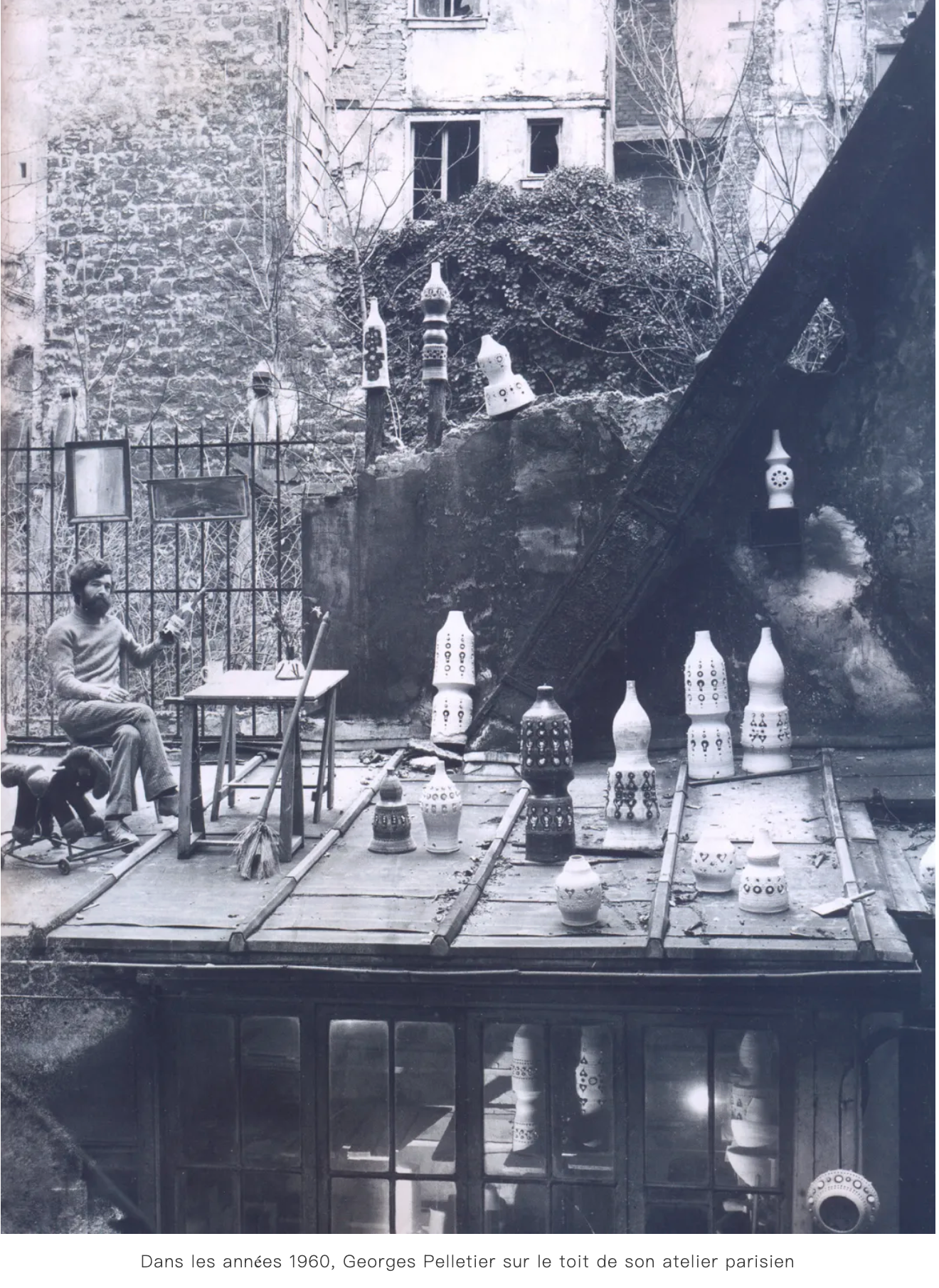
In the 1970s, as trends in ceramics evolved, he settled in Cannes, France, where he led a comfortable life while continuing his personal creative work, exploring for decades the relationship between light and clay. In 2010, as vintage fashion made a strong comeback in Europe, his works once again became sought after by celebrities and brands.
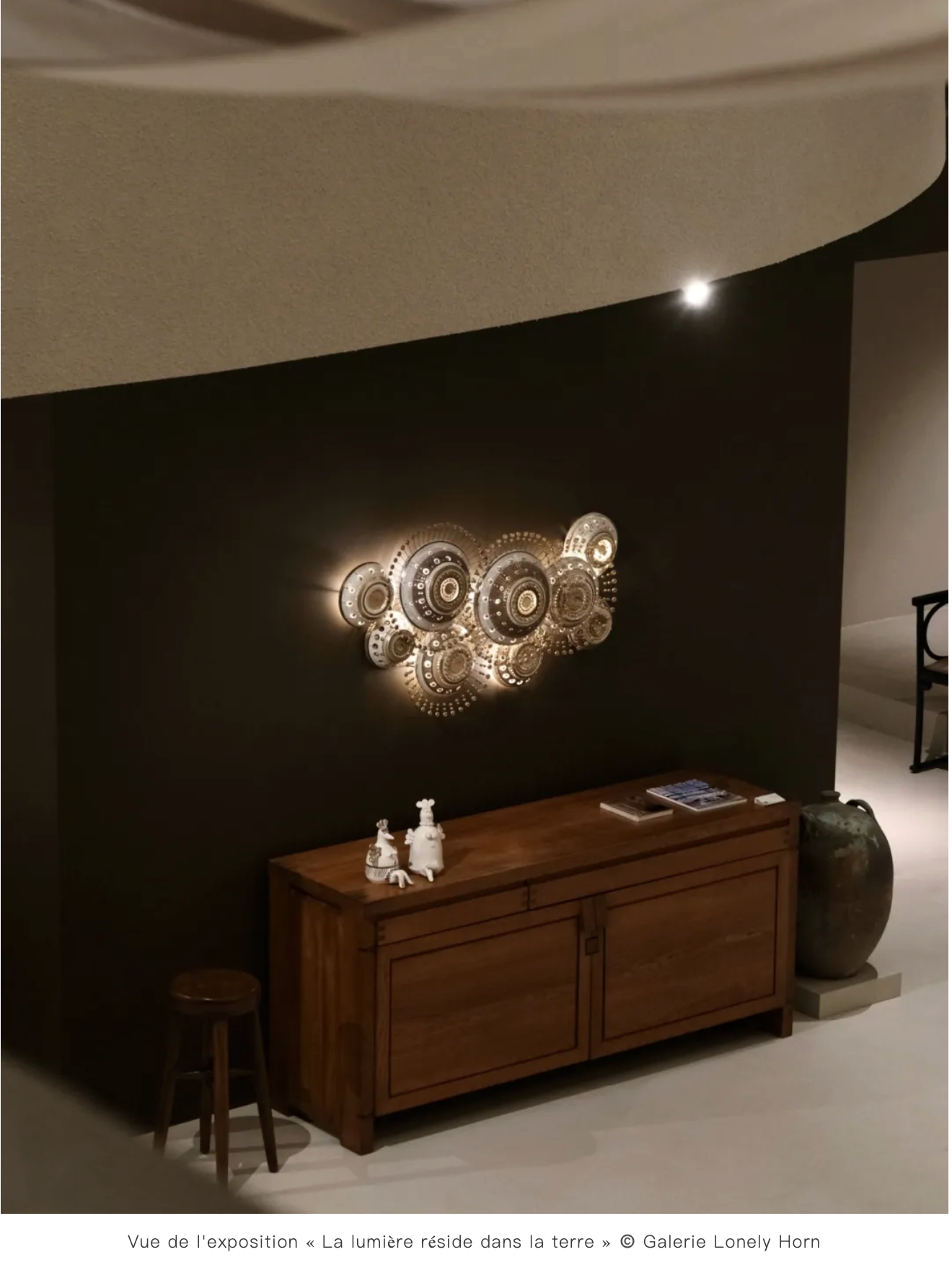
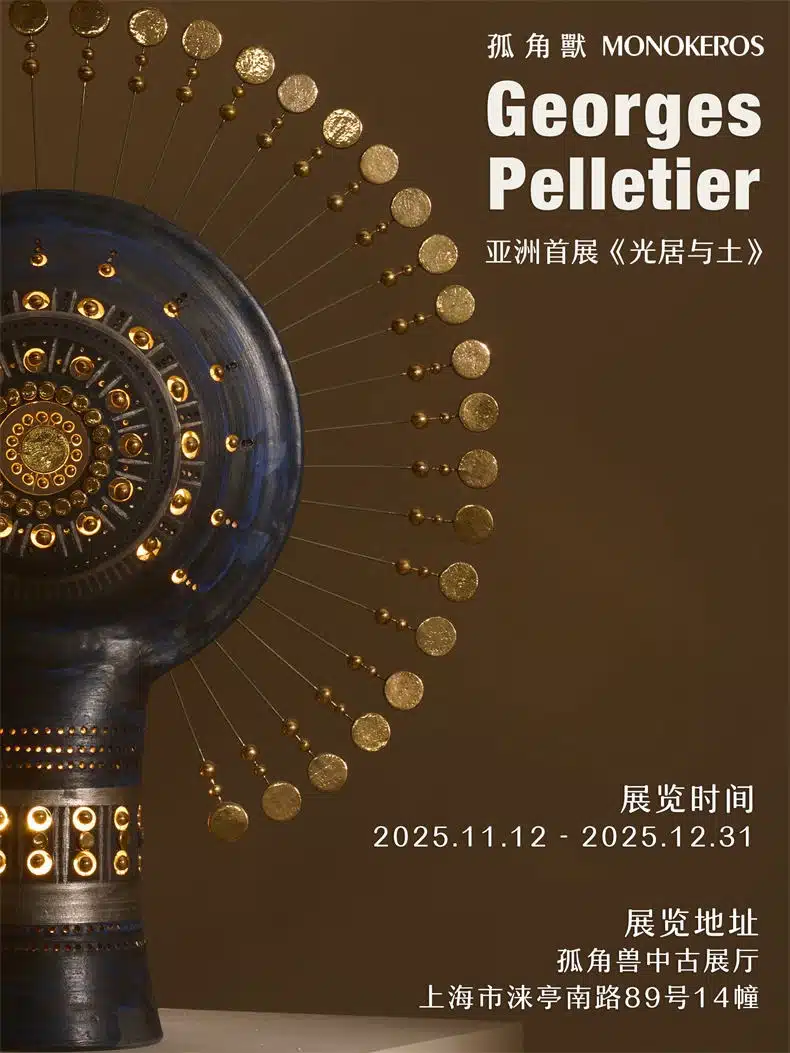
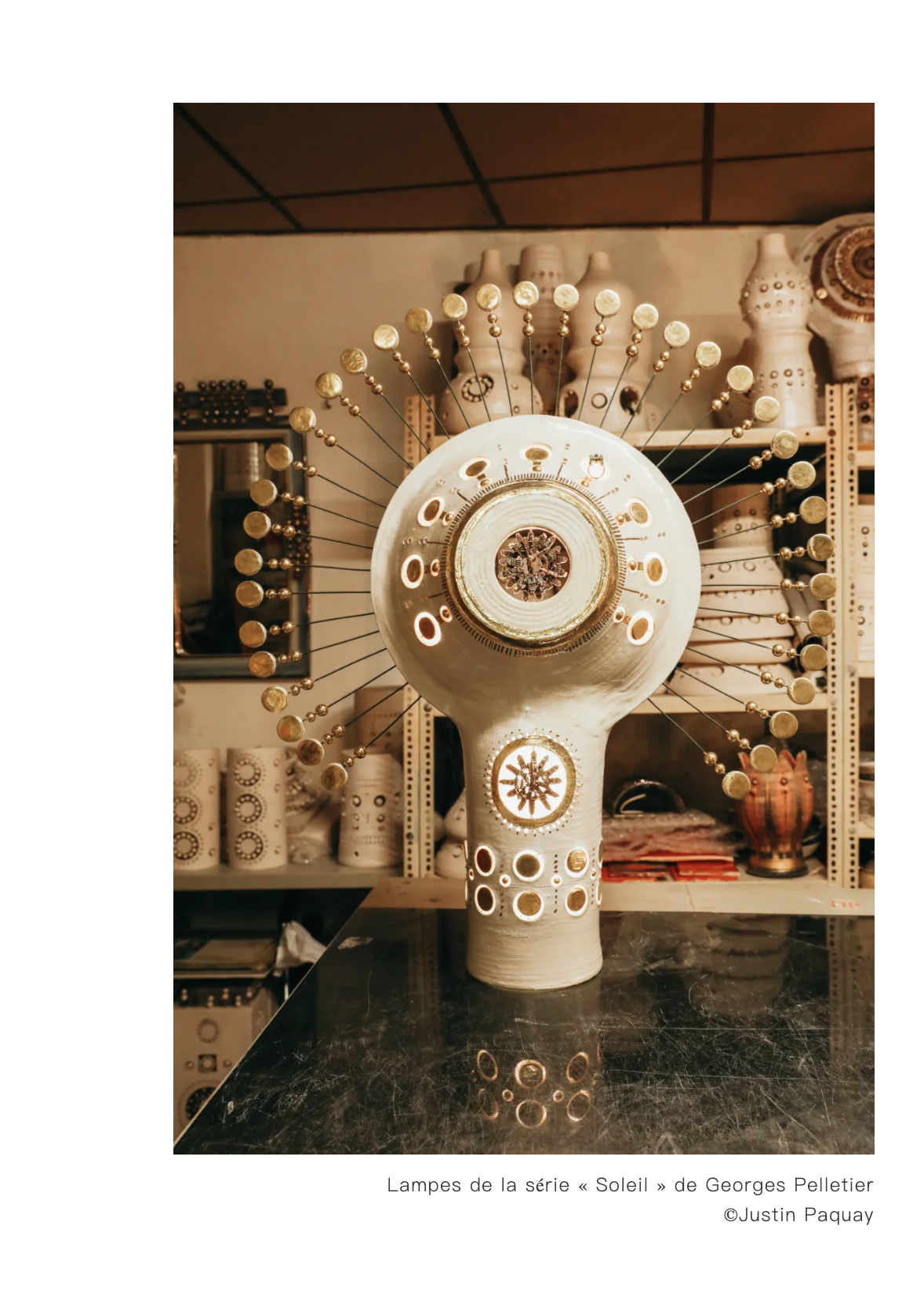
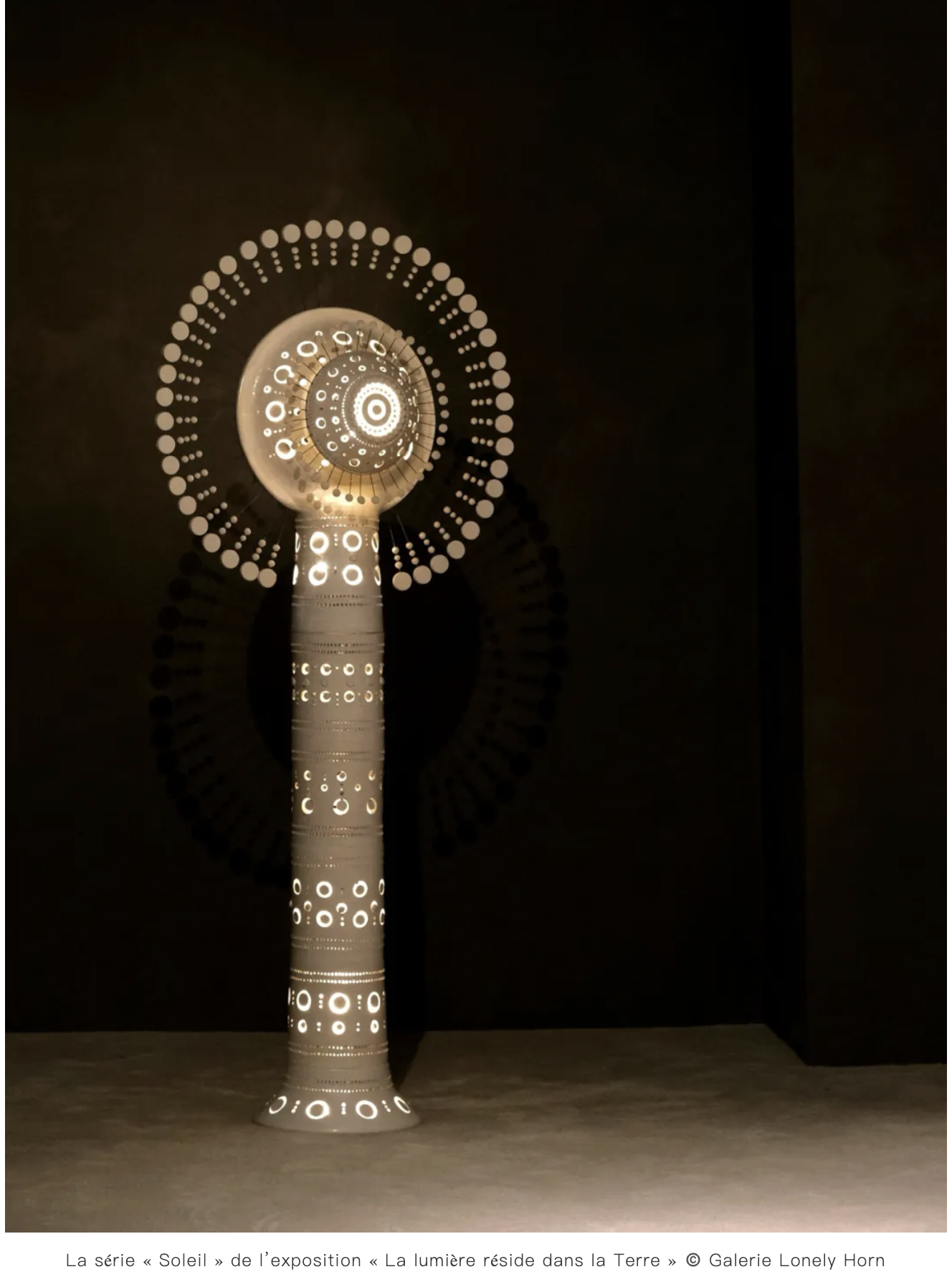
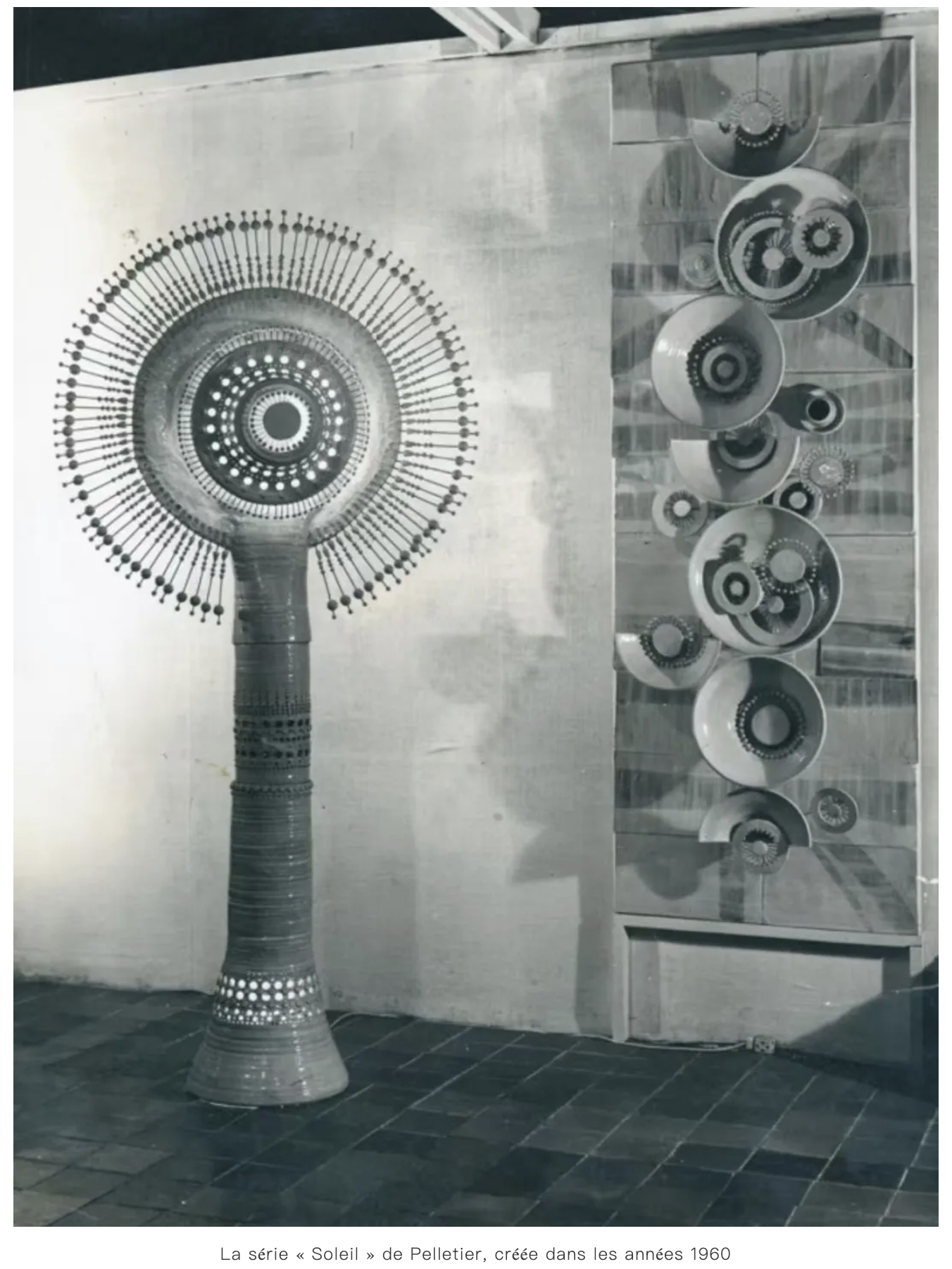
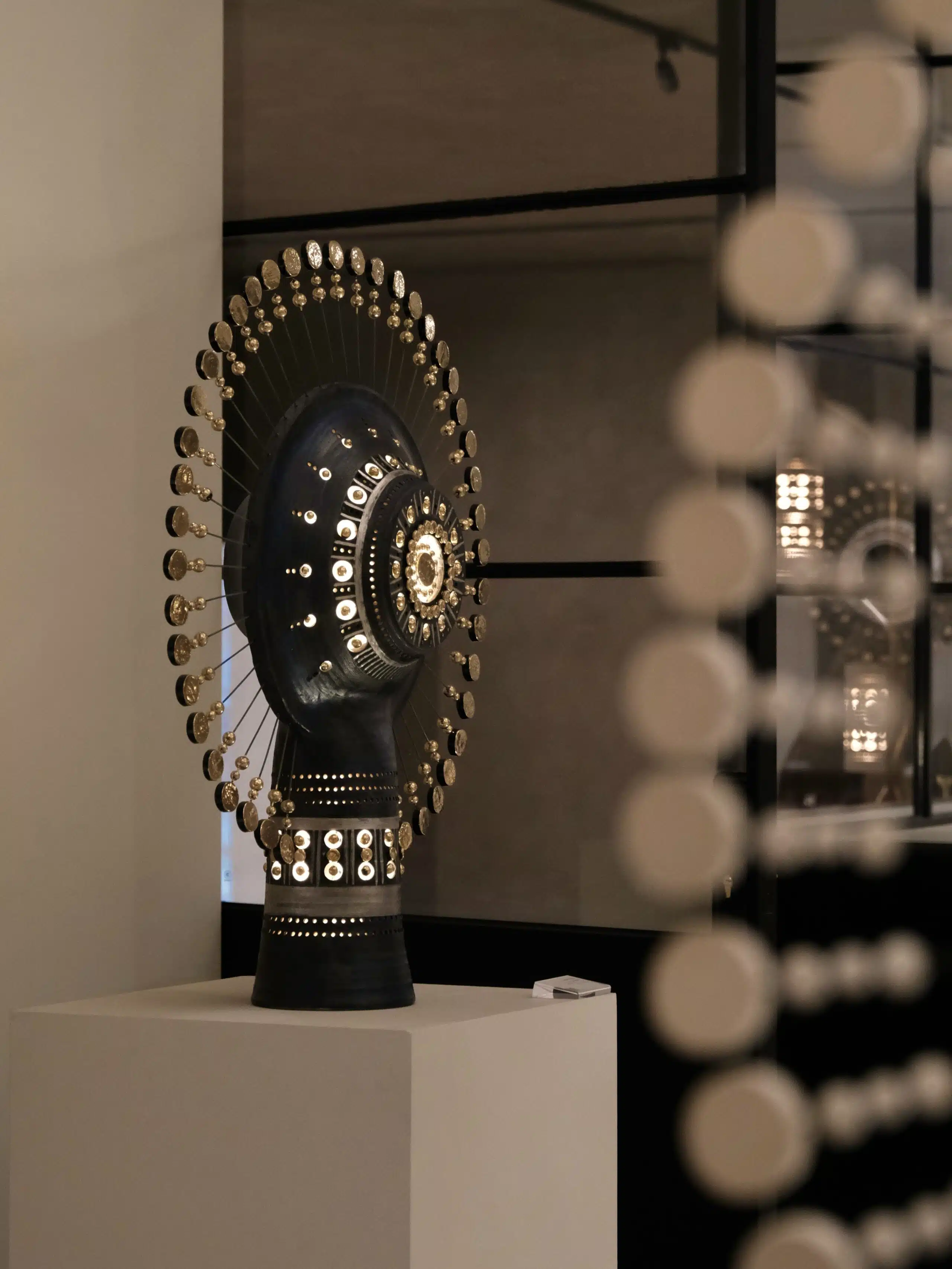
The exhibition ‘Light Resides in the Earth’, presented at the Monokeros Gallery in Shanghai, brings together more than thirty emblematic works by Pelletier, ranging from sculptural lamps to mirrored decorations and ornaments, all of which establish a dialogue between light and ceramic. The most iconic series, ‘Soleil’, with its radiant design, evokes eternal light emerging from clay; filtered through the openwork ceramic surface, it casts a soft, warm halo, making each lamp not only a lighting object but also a sculpture.
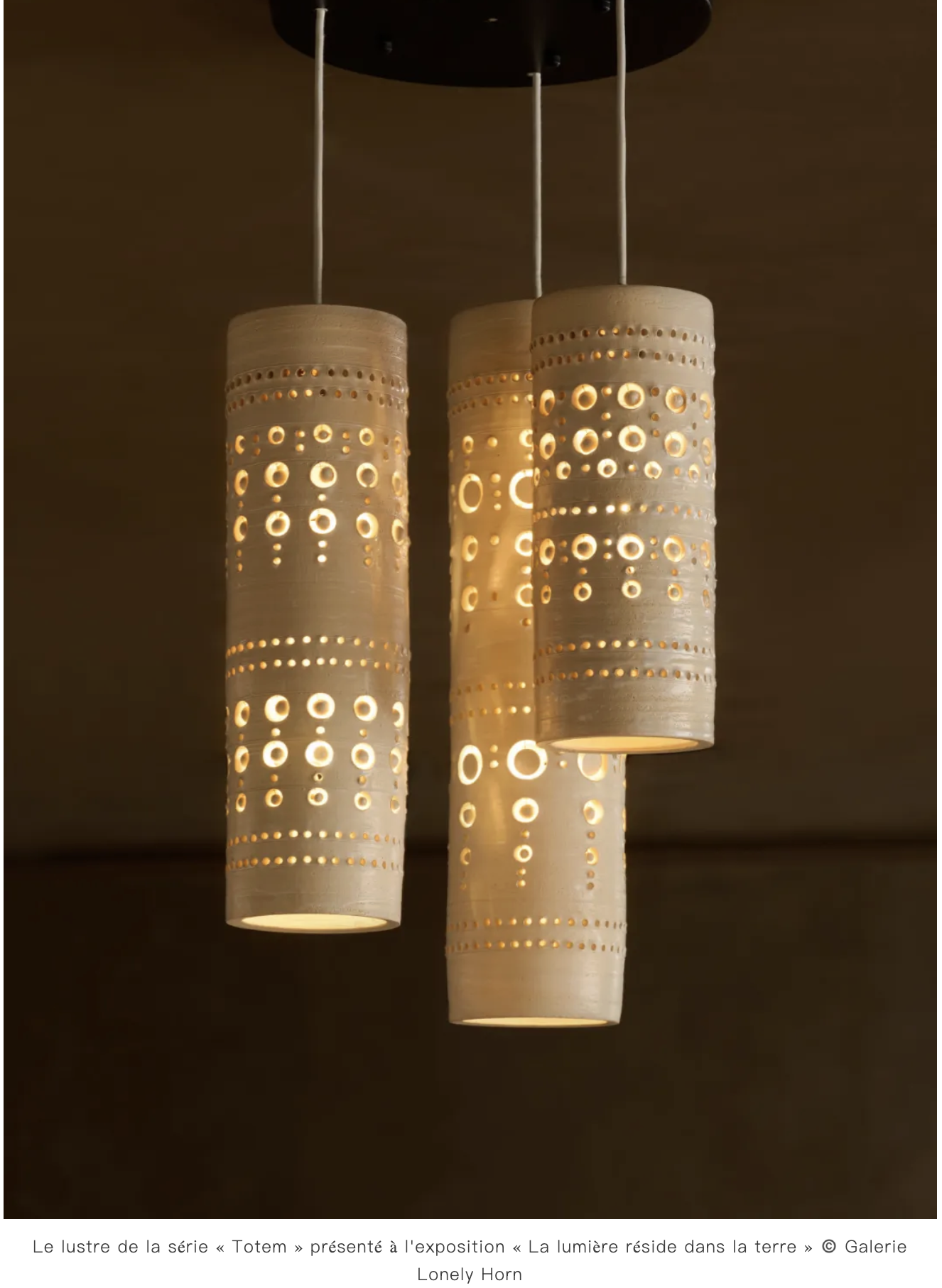
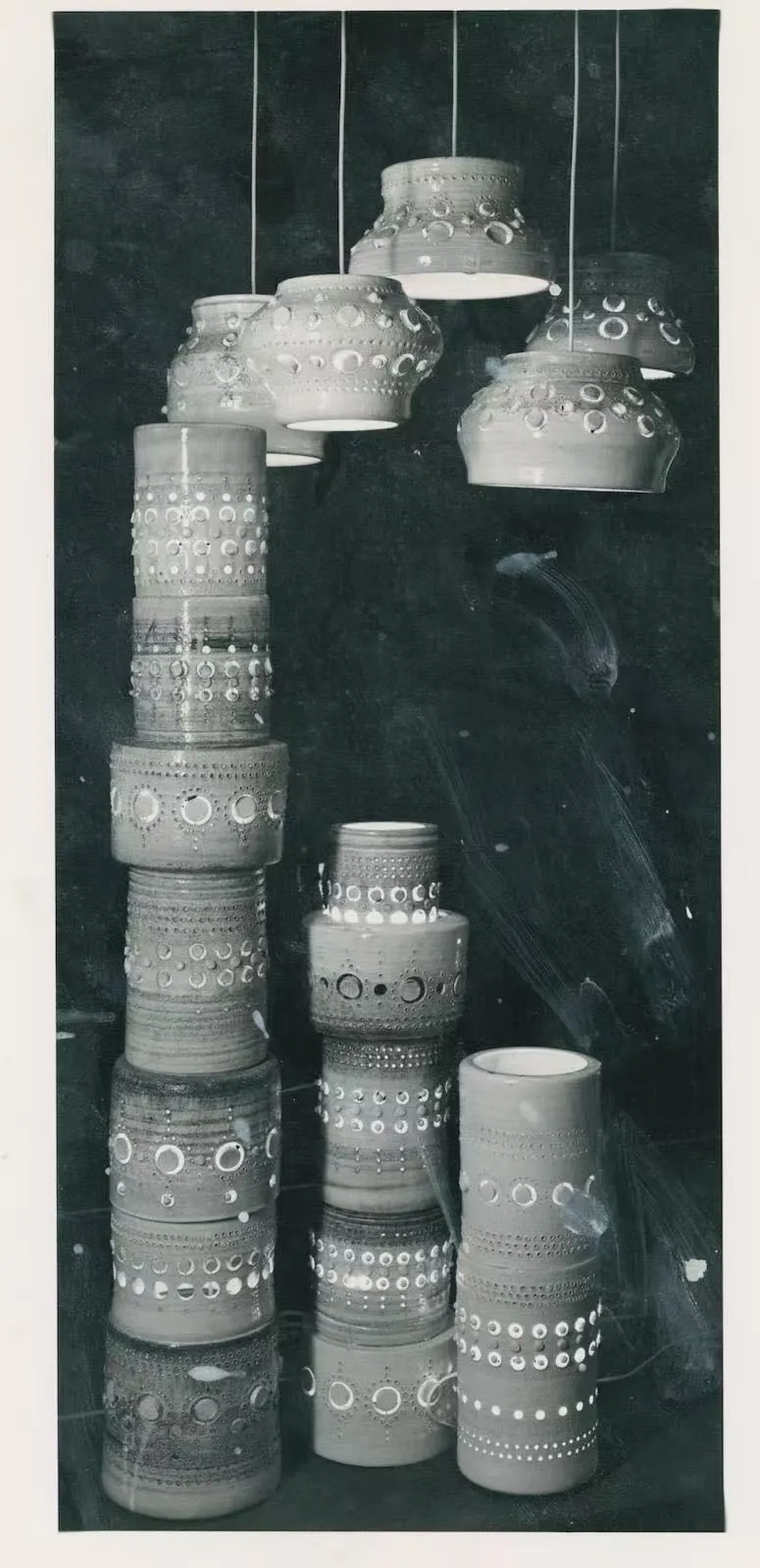
Intuition was the primary driving force behind Georges Pelletier’s creative work.
His son, Benjamin Pelletier, stated in an interview:
‘My father always created intuitively; he never mentioned any specific source of inspiration. All of his works were conceived through desire and intuition, rather than by reference to other objects.’
These recurring symbols and totems are traces of that intuition: whether it is the light radiating from the center of the lamp or the carved texture on the surface of the terracotta, every extension of form responds to inner feelings rather than external norms.”
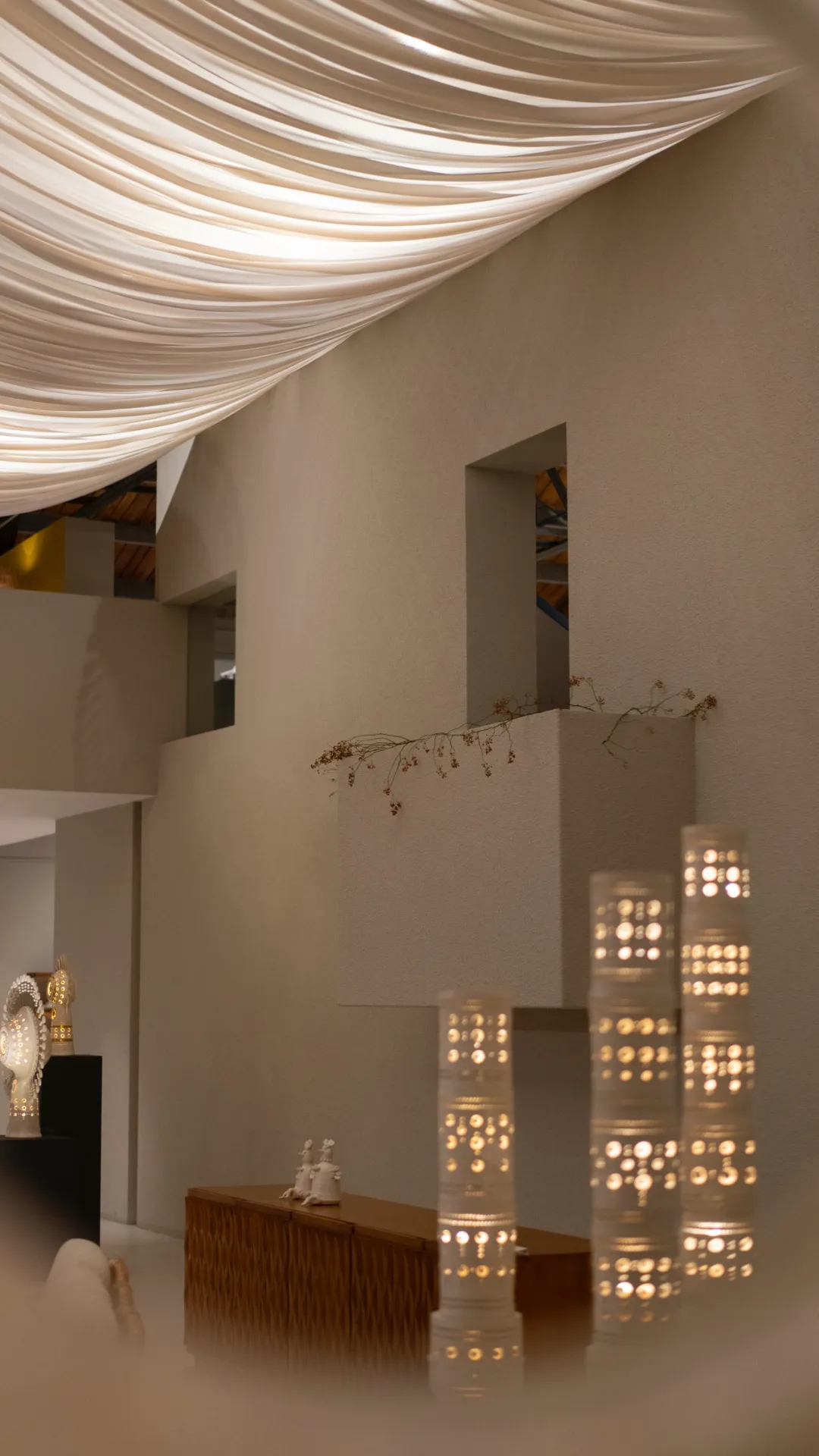
Intuition is visualized in this exhibition, shaping not only the works themselves but also prefiguring an intergenerational creative dialogue between father and son, a vitality that continuously circulates between craftsmanship and light and shadow, ideas and materials.
Georges Pelletier passed away in 2024, a loss deeply felt by the international communities of ceramic artists and collectors. His creative spirit, however, lives on through his son, Benjamin.
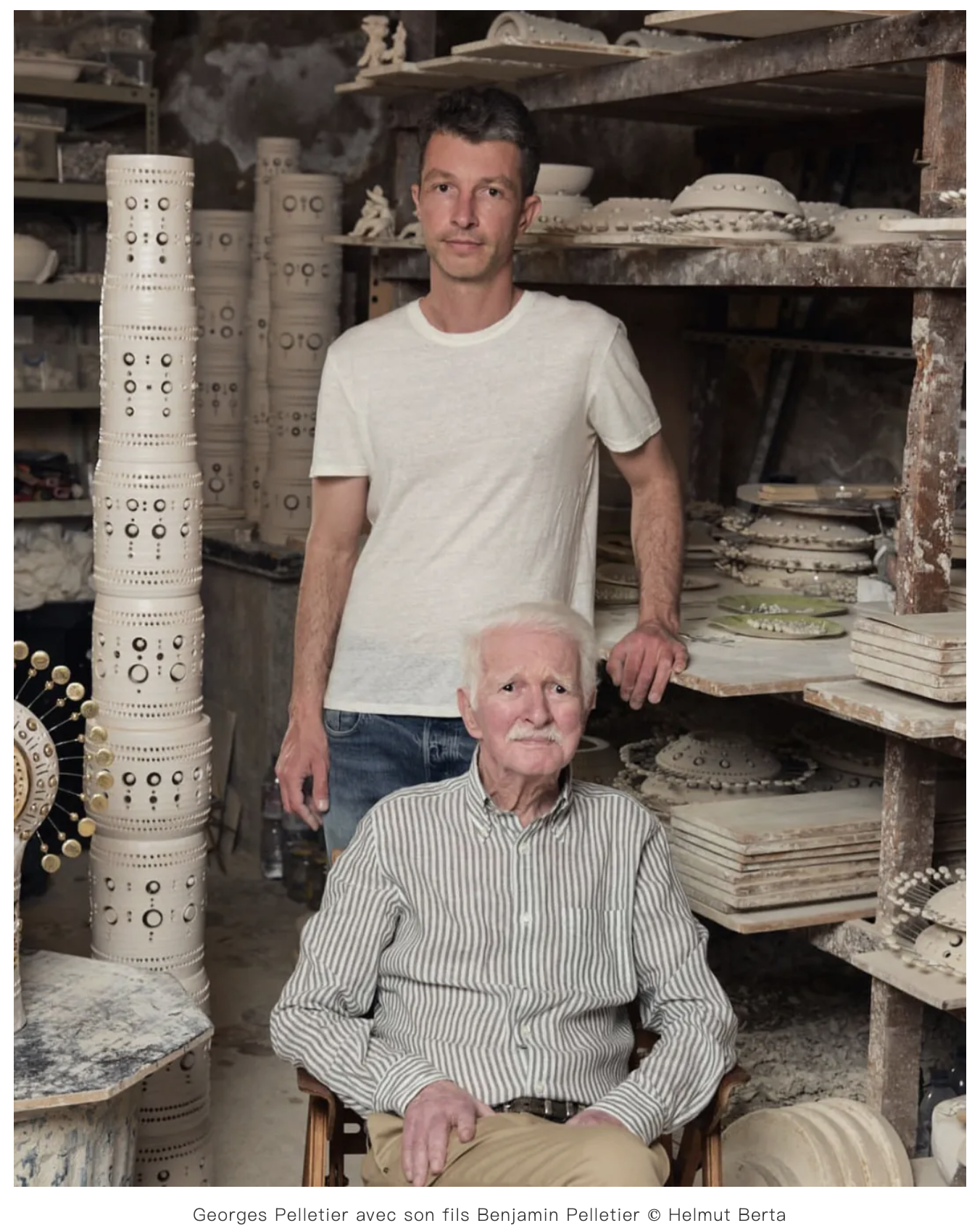
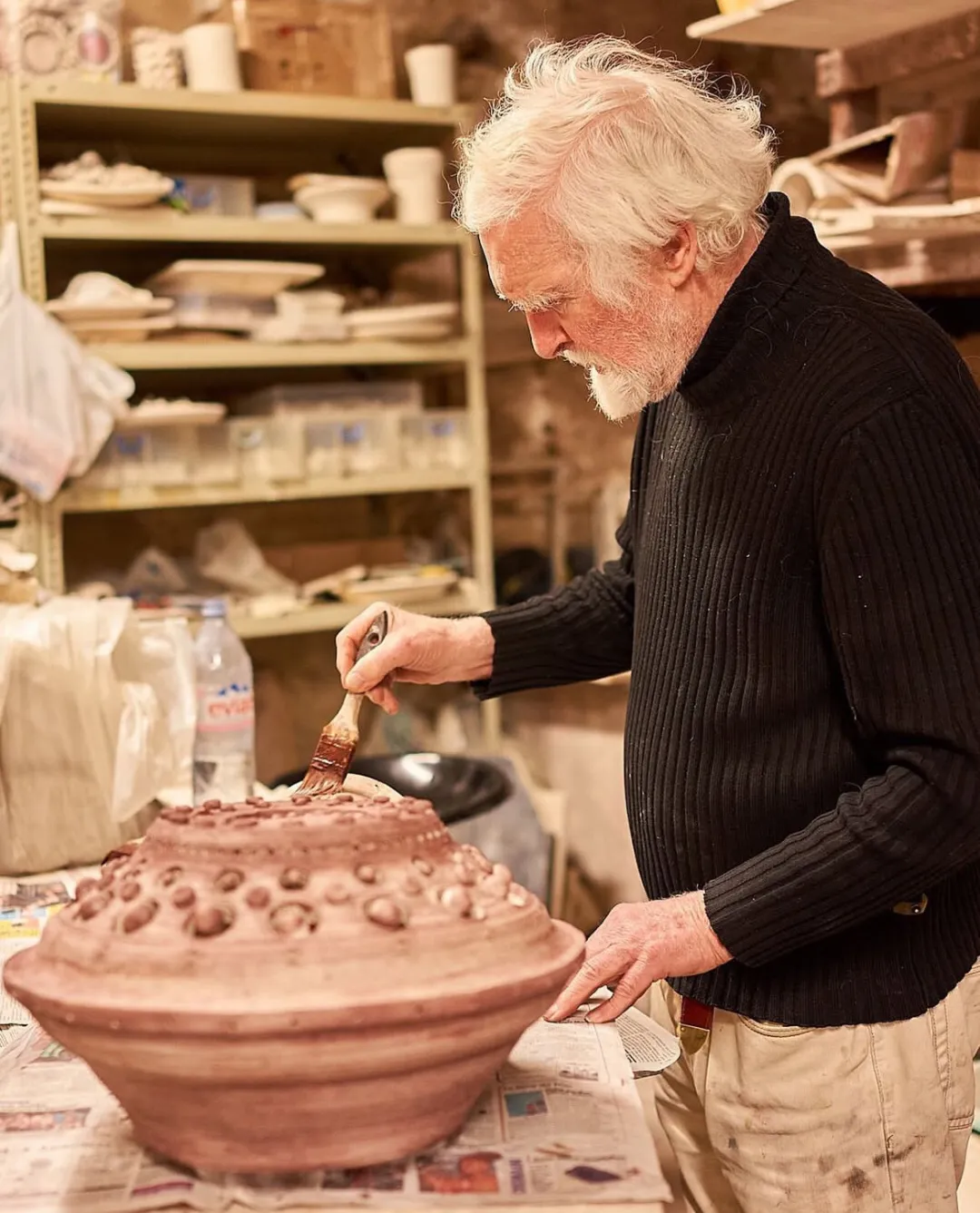
In the Pelletier workshop, clay was not a static substance but a rhythmic entity. Benjamin recalls his father’s creative process:
‘He does not speak much, but each of his movements reveals patience, meticulousness, and the joy of creating.’
For decades, the interaction between light, clay, and hands has created a shared language between father and son: each sculpture, each cut, each layer of glaze is an act of listening and a response to the material. ‘The most complex part is assembling the different elements of a work to create harmony between structural balance and suspended elements.
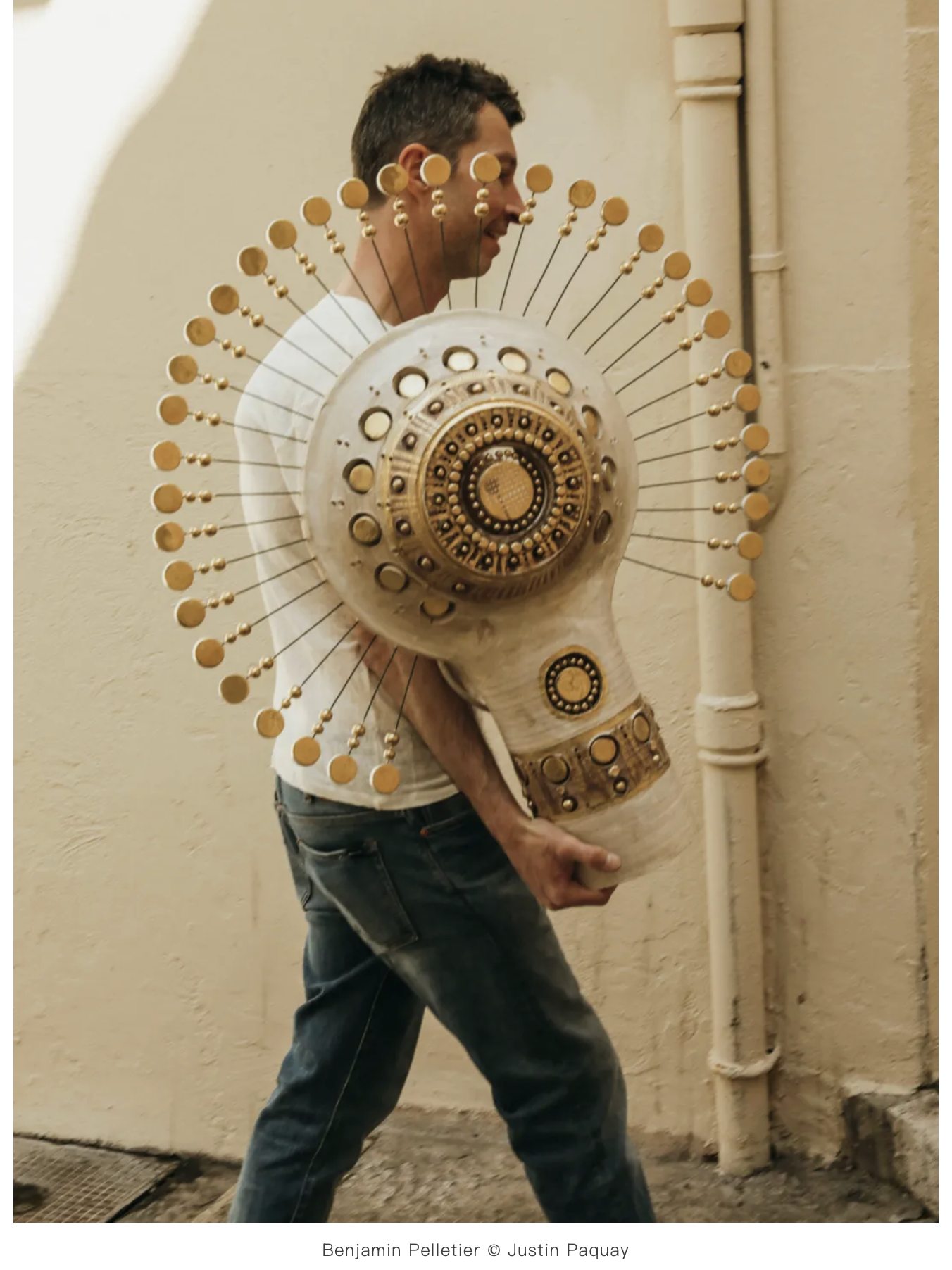
When Benjamin spoke of his father’s iconic ‘Soleil’ lamp series, he explained that the spheres and radiating forms seemed to dance across the surface of the clay, and that the light, filtered through the openwork and textures, diffused a soft, lingering warmth. The firing process was carried out entirely by hand, and each outcome was a unique and unpredictable experience. It was precisely this subtle uncertainty that imbued each piece with an indelible character.
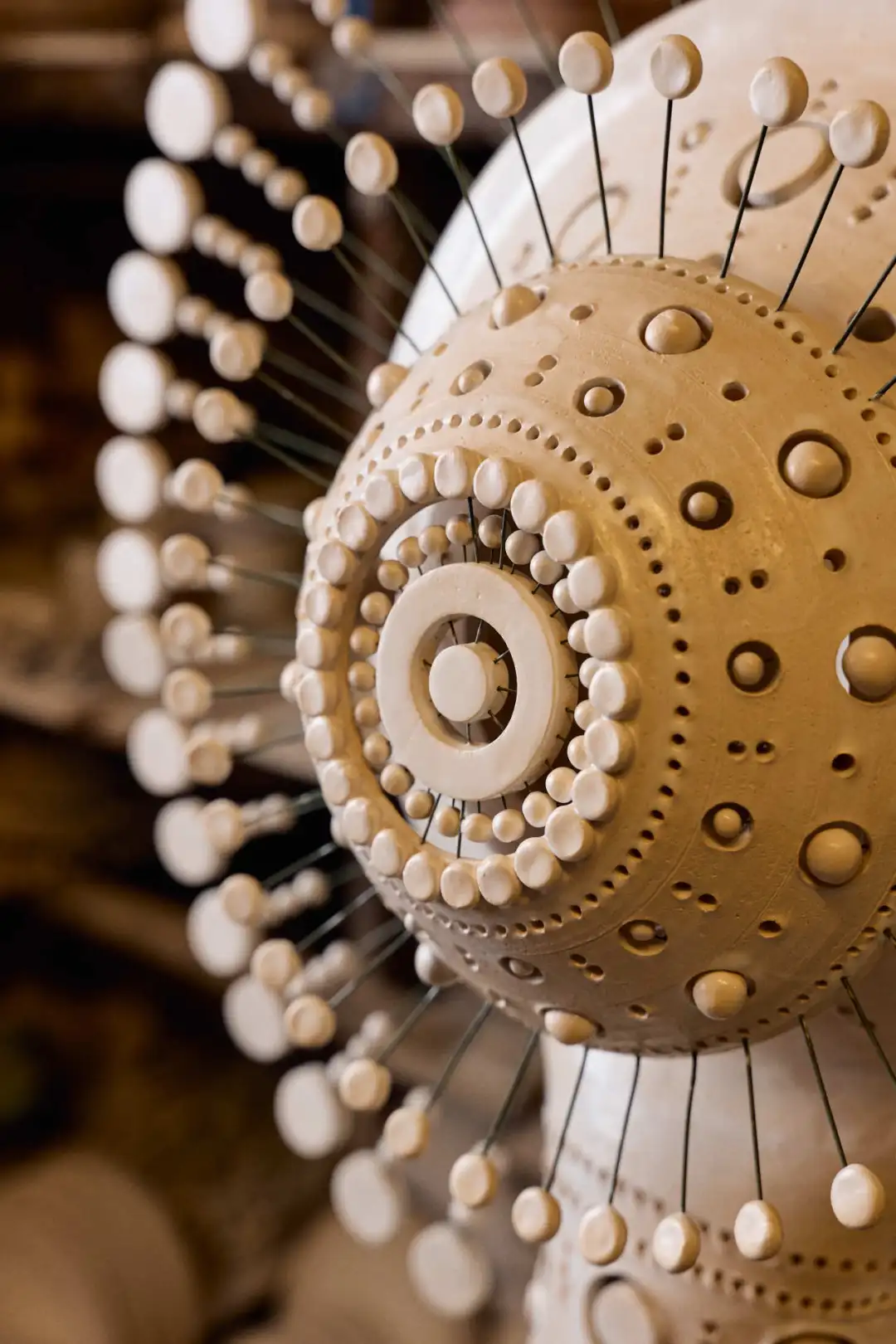
Benjamin’s father passed on to him not only technical skills, but also a keen sense of beauty: an appreciation for the beauty of irregularity and imperfection, and a respect for spontaneity and creative freedom. Introduced early on to the making of decorative accessories, Benjamin gradually took part in every stage of the process—from shaping to firing, and later to the restoration of finished pieces and the continuation of the craft. He used his father’s tools and methods, allowing the dialogue between light and clay, the warmth of his hands, and the rhythm of the flame to transcend time.
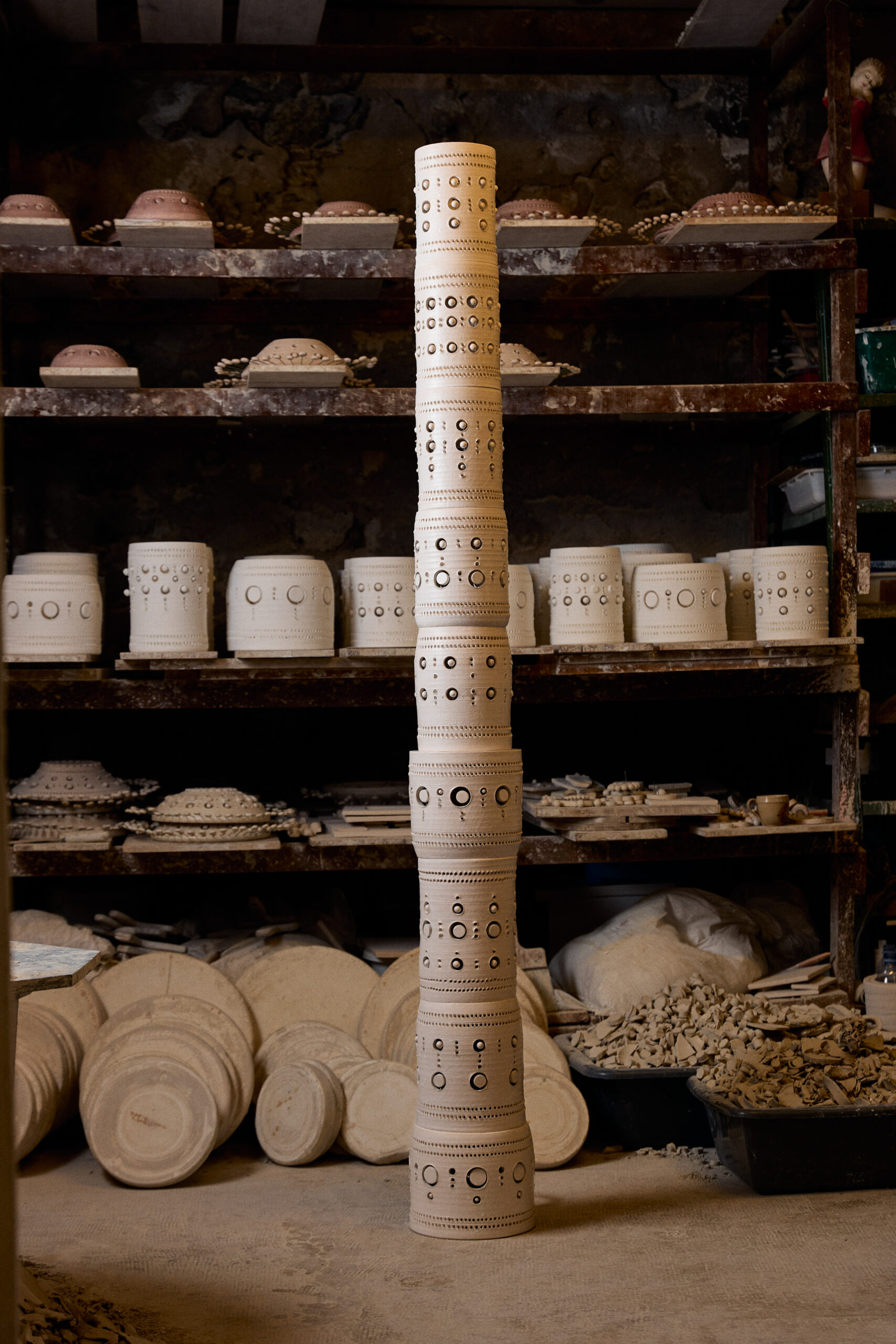
“In the exhibition ‘Light Dwells in the Earth’ at the Monokeros Gallery, each work retains the traces of craftsmanship and the imprint of time: light passes through the clay, projecting metaphors of concentration, patience, and the rhythm of life; the earth, in its most rustic form, carries within it the warmth of creation. As Benjamin stated:
‘I hope that when the audience sees the work illuminated, they will feel the same sense of wonder that a father felt when he first saw his work lit.’
Within the pulse of earth and fire, the light and form of handmade objects are rediscovered, and the time of creation is thus extended.”
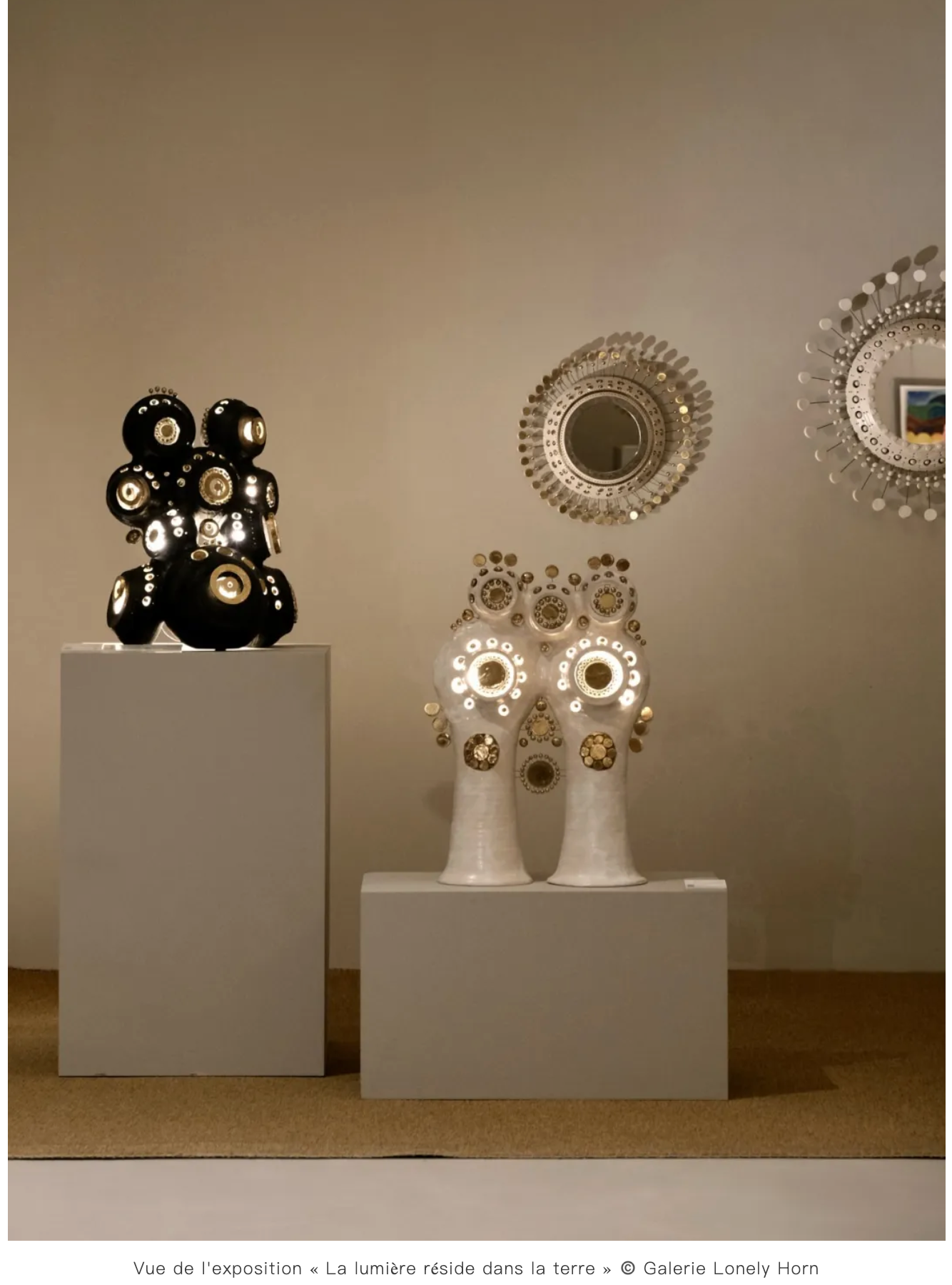
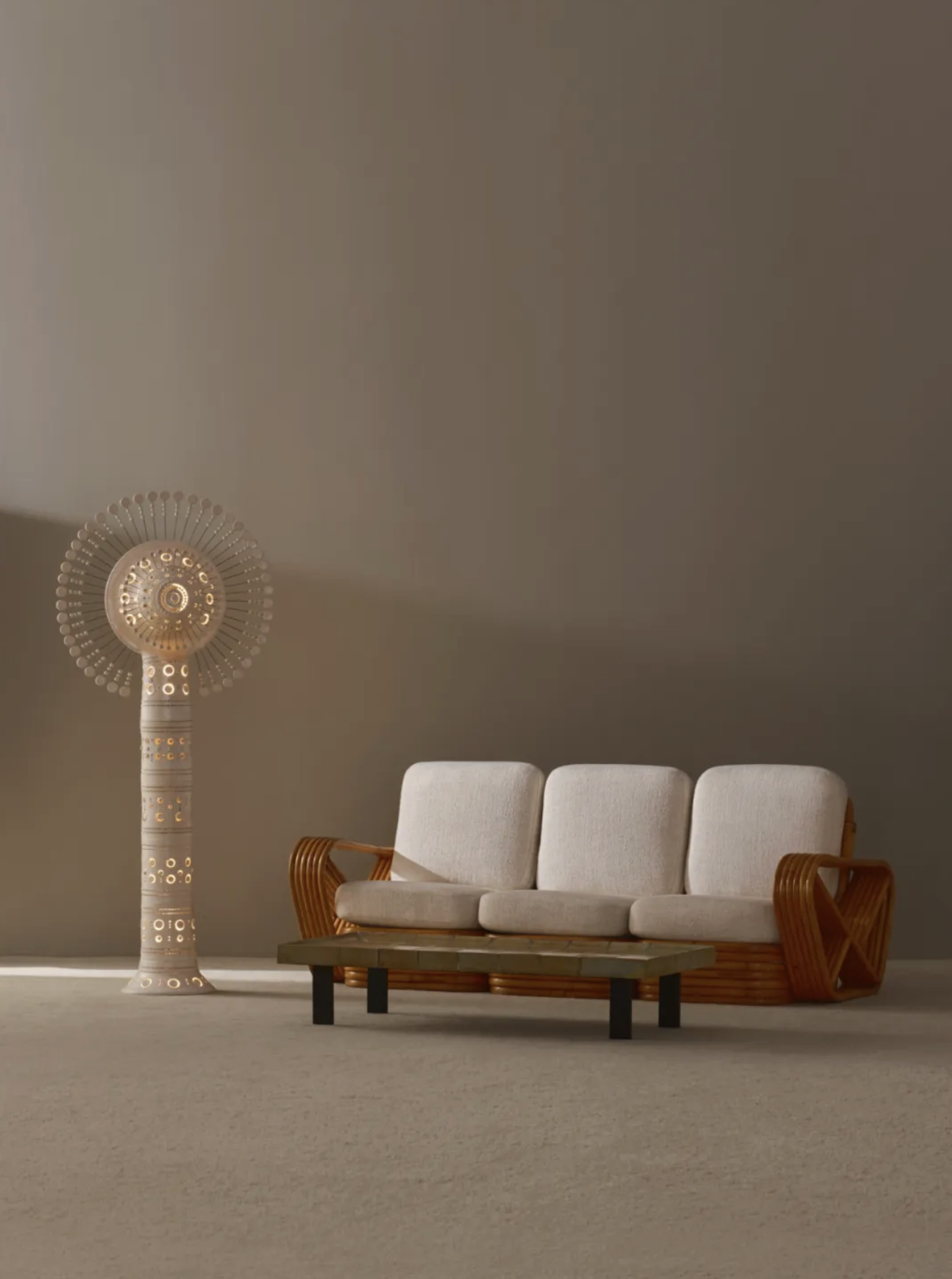
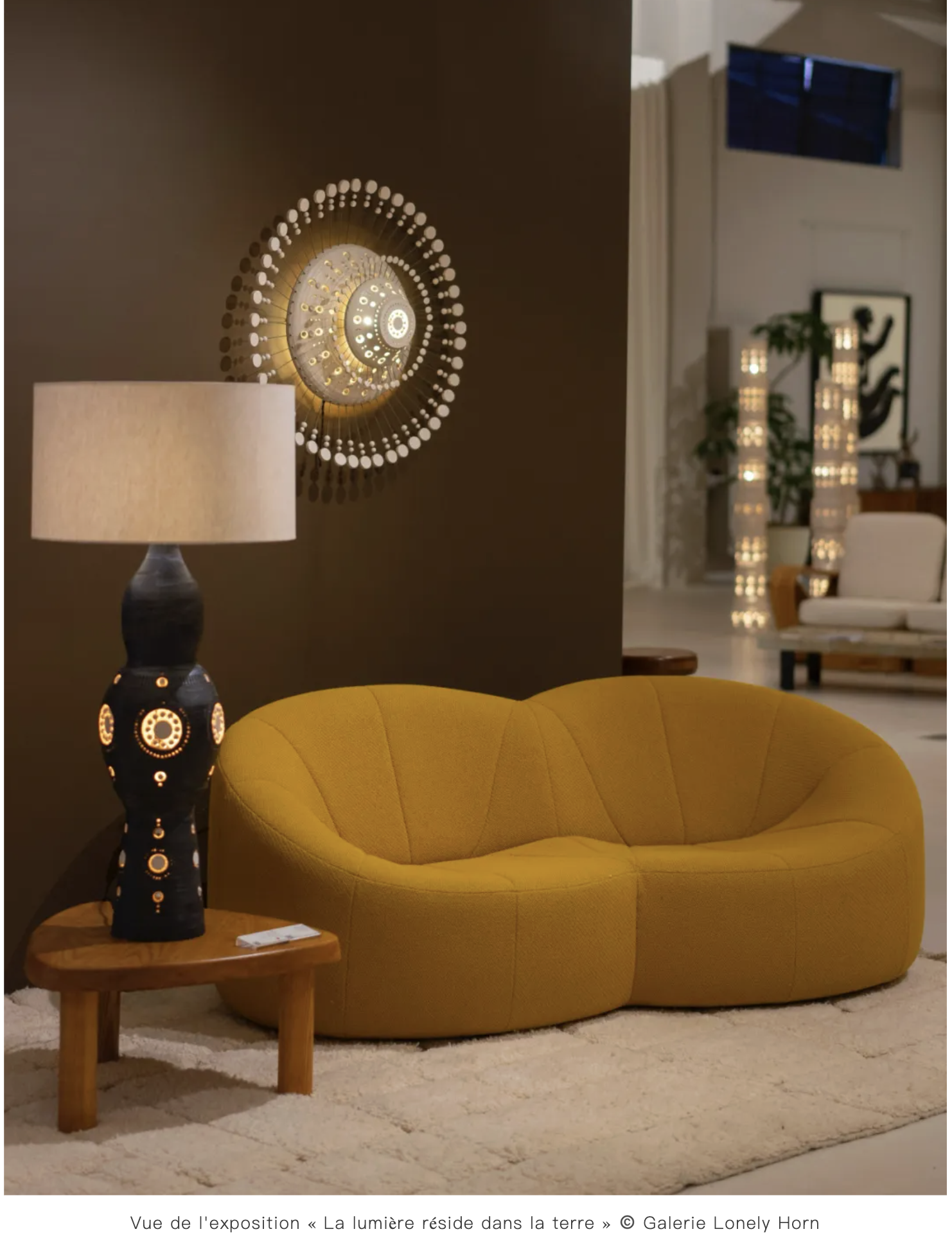
“At the Monokeros Gallery, Pelletier’s work is illuminated once again: light, filtered through the openwork and curved surfaces of the terracotta, casts shadows onto the walls and vintage furniture, creating subtle rhythms that resonate with the space. The bond between light, clay, and handcraft born of the collaboration between father and son in their workshop, extends here into a perceptual interaction between the viewer and the place.”
Xiao Jie, curator of the Lonely Horn Gallery, also maintains a deep emotional connection to these works. Her husband, Mathieu, began collecting Georges Pelletier’s works on the antiques market twenty years ago, witnessing his creative evolution during the 1960s and 1970s
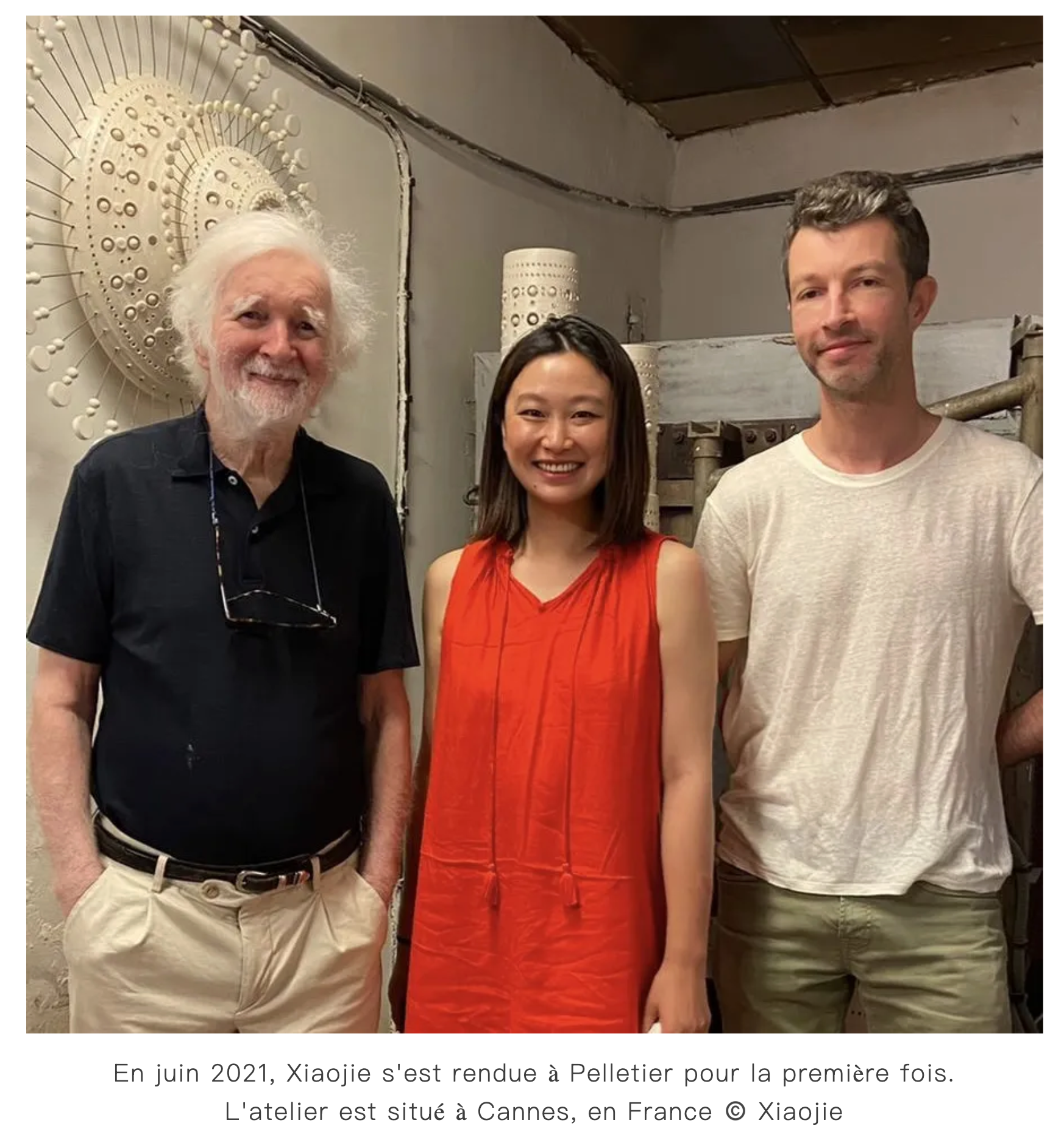
After opening their gallery in Shanghai in 2021, Monokeros visited the father-and-son workshop and began planning its first exhibition in Asia.
These four years of waiting represented not only the passage of time, but also a respect for the rhythm of craftsmanship: large-scale, sculptural works carry a high risk during firing, and each piece requires patient refinement before it can be fully presented.

The exhibition space itself becomes an extension of the works. Designed by HT Studio, the Monokeros Gallery spans approximately 1,500 square meters and evokes an intimate art space rather than a traditional gallery. The curatorial team fully embraced the site’s characteristics during the installation, creating harmony between the ceramic lamps, sculptures, and the artist’s vintage furniture. Through the interplay of light and shadow, visitors perceive the presence of each piece, as if it naturally belonged there
“When speaking about the Chinese market’s current acceptance of vintage aesthetics and artistic furniture, Xiaojie noted:
‘Vintage furniture and handcrafted objects are increasingly appreciated. Compared to the antique objects passed down through generations in European households, authentic antique furniture is relatively rare in China. However, Chinese consumers’ interest in objects imbued with history and the warmth of craftsmanship remains strong.’
Over the past decade, through media promotion and growing market awareness, this demand has gradually expanded across different age groups and regions. According to her, what truly resonates with Chinese audiences is the individuality and exceptional craftsmanship of the pieces themselves, far more than simple brand recognition. Even furniture produced in very small quantities in modest workshops can find its audience in China, provided the materials are carefully selected and the craftsmanship is unique. The delicacy of such work—bronze, parchment, fish skin, or ox bone—allows viewers to sense the weight of time and the warmth of craftsmanship. As Xiaojie stated:
‘The slow and meticulous nature of ceramics, along with the sense of time embodied in medieval furniture, has resonated with Chinese audiences and offered a new “habitable” context for these works.’
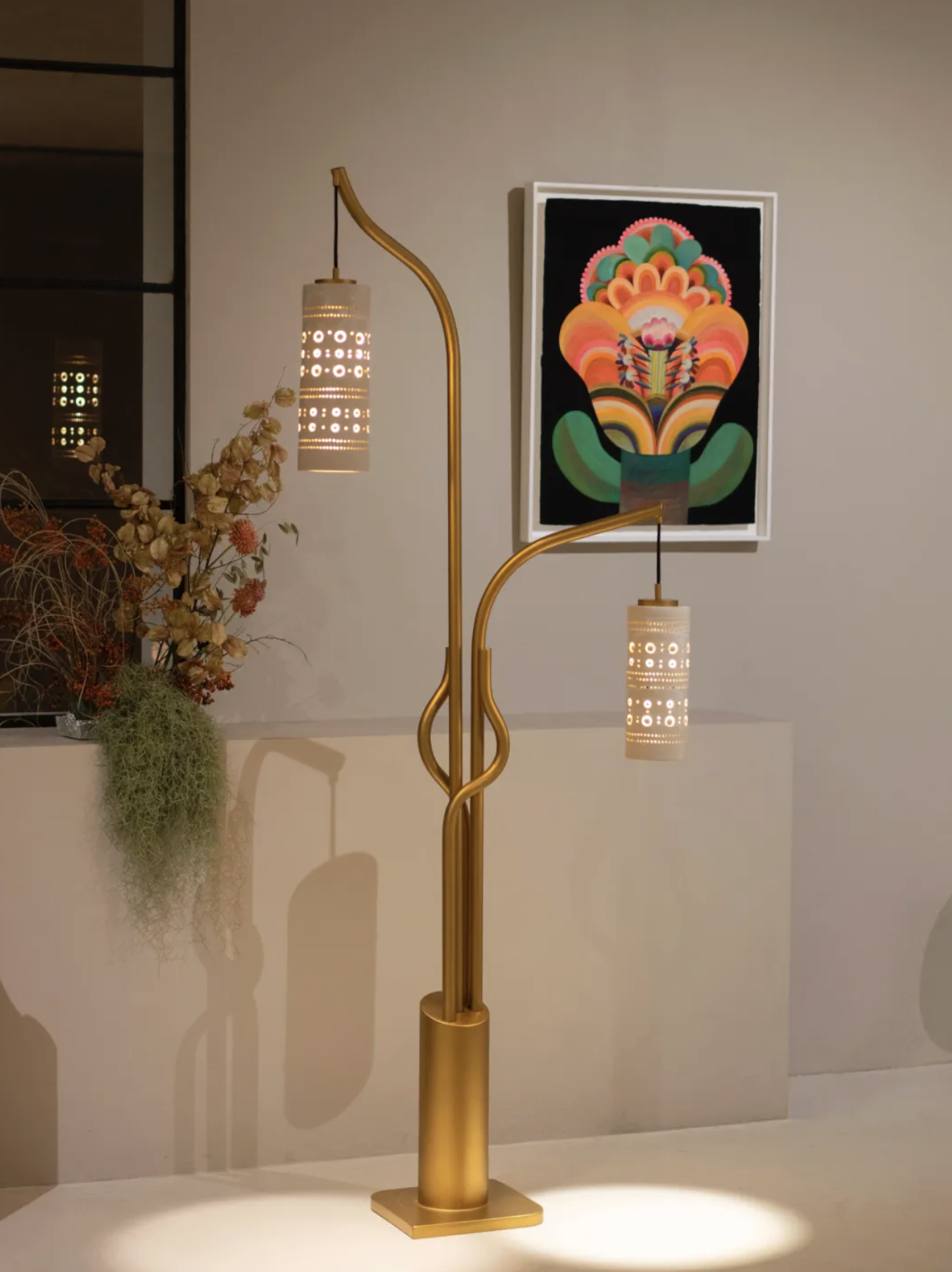
Ultimately, within the space of the Monokeros Gallery, light and terracotta, furniture and materials resonate with one another, and each Pelletier piece is quietly contemplated and delicately brought together here in its singularity. Within the exhibition space, clay and light subtly overlap, as if inviting the audience to slow down and linger for a moment alongside the works.
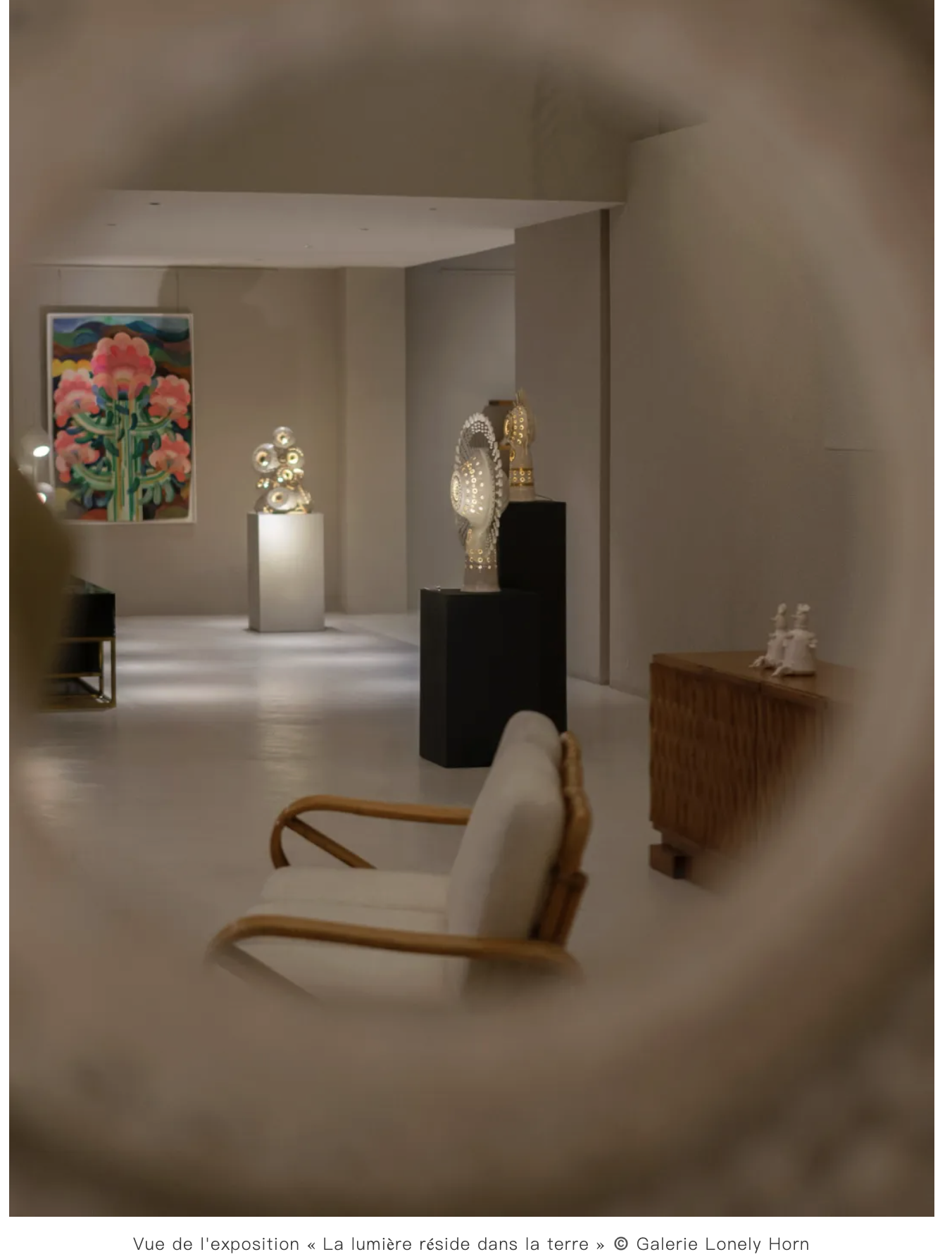
It is worth noting that even in the final half hour of his life, Pelletier was still working, continuing to shape clay with the same dedication he had shown for decades.
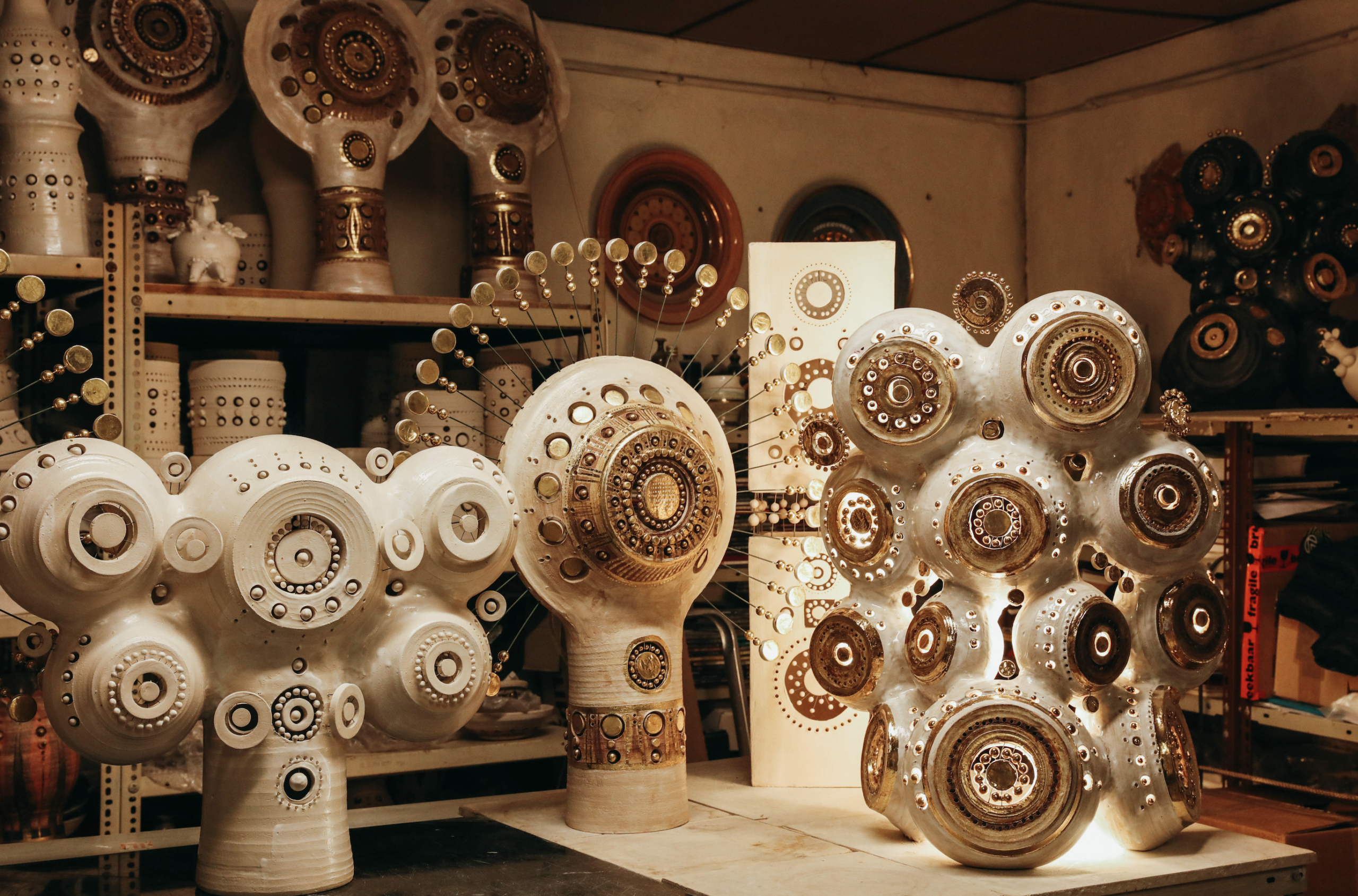
This is why these works possess a vitality that burns continuously, a persistence that is both gentle and powerful.
The exhibition was thus conceived, allowing this light to continue to be seen today.